How Long Does a Water Heater Last in a Christiana Home?
The age on the label matters less than how the heater has been treated, and a little yearly care can buy you years of hot showers.
What is the lifespan of a water heater?
A standard tank water heater usually lasts 8 to 12 years, and a tankless water heater often runs 20 years or more. Where yours lands in that range depends on your water, how hard the unit works and whether it gets regular flushing and checkups. For a free estimate on care or replacement, reach us at (615) 805-6484.
Tank vs. tankless: why the numbers are so different
A tank heater keeps 40 or 50 gallons of water hot around the clock. That water sits against a steel tank lined with glass, and over time minerals settle on the bottom and the lining wears thin. Once the steel starts to rust through, there is no fixing it. The tank has to be replaced.
A tankless unit heats water only when you open a tap. There is no stored water slowly working on a steel shell, and most of its parts can be cleaned or swapped out individually. That is the main reason tankless units tend to outlast tanks by close to a decade when they are looked after.
What wears a water heater out early
Hard water is the biggest factor we see. Much of Middle Tennessee has water with a fair amount of calcium and magnesium in it, and those minerals collect as scale. In a tank, scale forms a crusty layer on the bottom that the burner or element has to heat through. In a tankless unit, it coats the heat exchanger and cuts efficiency.
A few other things speed up the clock as well.
- Skipping the yearly flush, so sediment keeps building
- An anode rod that has been used up and never replaced
- Water pressure running higher than the heater was built for
- A unit that is too small for your household, so it cycles constantly
- Installation in a cold garage or crawlspace without proper protection
Simple upkeep that adds years
The good news is that most of what shortens a heater's life can be slowed down. None of this is complicated, and it costs far less than an early replacement.
For a tank heater, the two big ones are flushing and the anode rod. The anode rod is a metal stick inside the tank that corrodes on purpose so the tank does not. When it is gone, the tank starts taking the damage instead. Checking it every few years and replacing it when it is worn is one of the cheapest ways to keep a tank going.
For a tankless unit, the key step is descaling. We run a vinegar or descaling solution through the heat exchanger to dissolve buildup, then clean the inlet screen. If your water is hard, this is worth doing every year.
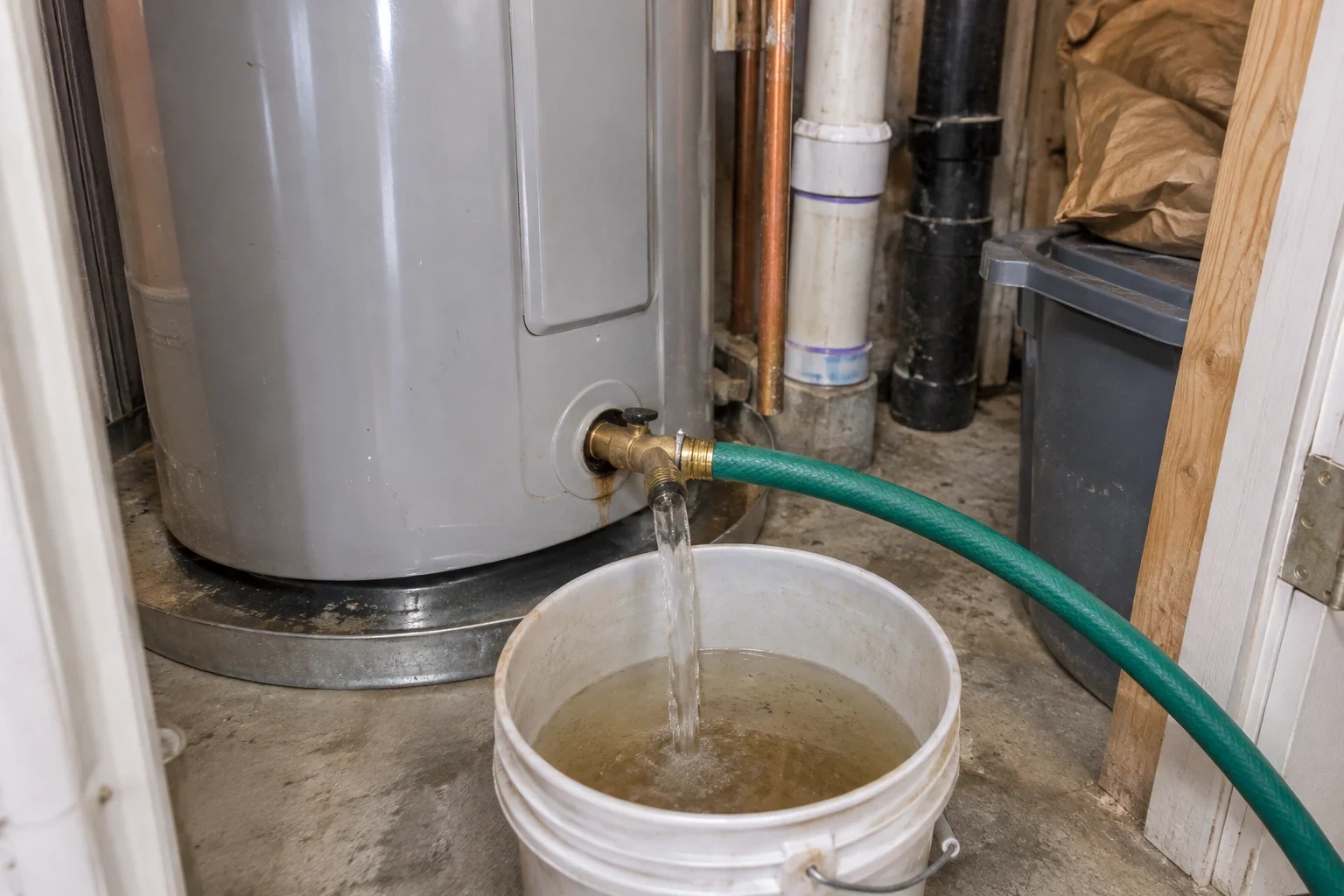
- Tank: drain and flush sediment once a year
- Tank: inspect the anode rod every two to three years
- Tank: test the temperature and pressure relief valve
- Tankless: descale the heat exchanger yearly
- Tankless: clean the inlet water filter screen
- Both: keep the area around the unit clear and dry
Signs your water heater is nearing the end
Age is the first clue. The manufacture date is usually coded into the serial number on the label, and if a tank is past ten years, it is worth keeping a closer eye on it. Age alone does not mean it has to go, but it does mean planning ahead beats waiting for a cold morning.
Other signs tell you more about the heater's actual condition. Rusty or brown hot water, rumbling or popping noises, water pooling around the base, and hot water that runs out faster than it used to all point to a heater that is struggling. If you notice moisture at the bottom of a tank, it is time to call, because a failing tank can let go without much warning.
When protecting the whole system makes sense
If scale keeps showing up on your faucets, shower doors and inside your heater, the water itself may be the real problem. A whole home water filtration system treats water where it enters the house, which can slow scale in the water heater and in every fixture downstream. For many families, that one change does more for a heater's lifespan than anything else.
When a tank does reach the end, it is also a natural time to think about tankless water heater installation. A tankless unit takes up less space, gives you steady hot water, and with yearly descaling it can serve your home for a long time. We will walk you through both options honestly, including when keeping a tank is the better fit.
More questions about water heater lifespan
Is it worth repairing an older water heater?
If the tank itself is sound, parts like a thermostat, element or gas valve can often be replaced and the heater keeps going. If the tank is leaking or badly rusted, replacement is the sensible choice.
Can I flush my own tank water heater?
Many homeowners do, using a garden hose on the drain valve with the power or gas turned off first. If the valve is stuck or the sediment is heavy, it is safer to let a plumber handle it.
Does a tankless water heater need more maintenance than a tank?
Not more, just different. A yearly descaling and a quick filter cleaning cover most of it, and that care is what lets a tankless unit reach its full lifespan.
Do you offer financing on a new water heater?
Yes, we offer financing options, and we accept all major credit cards and cash.
Get an honest look at your water heater
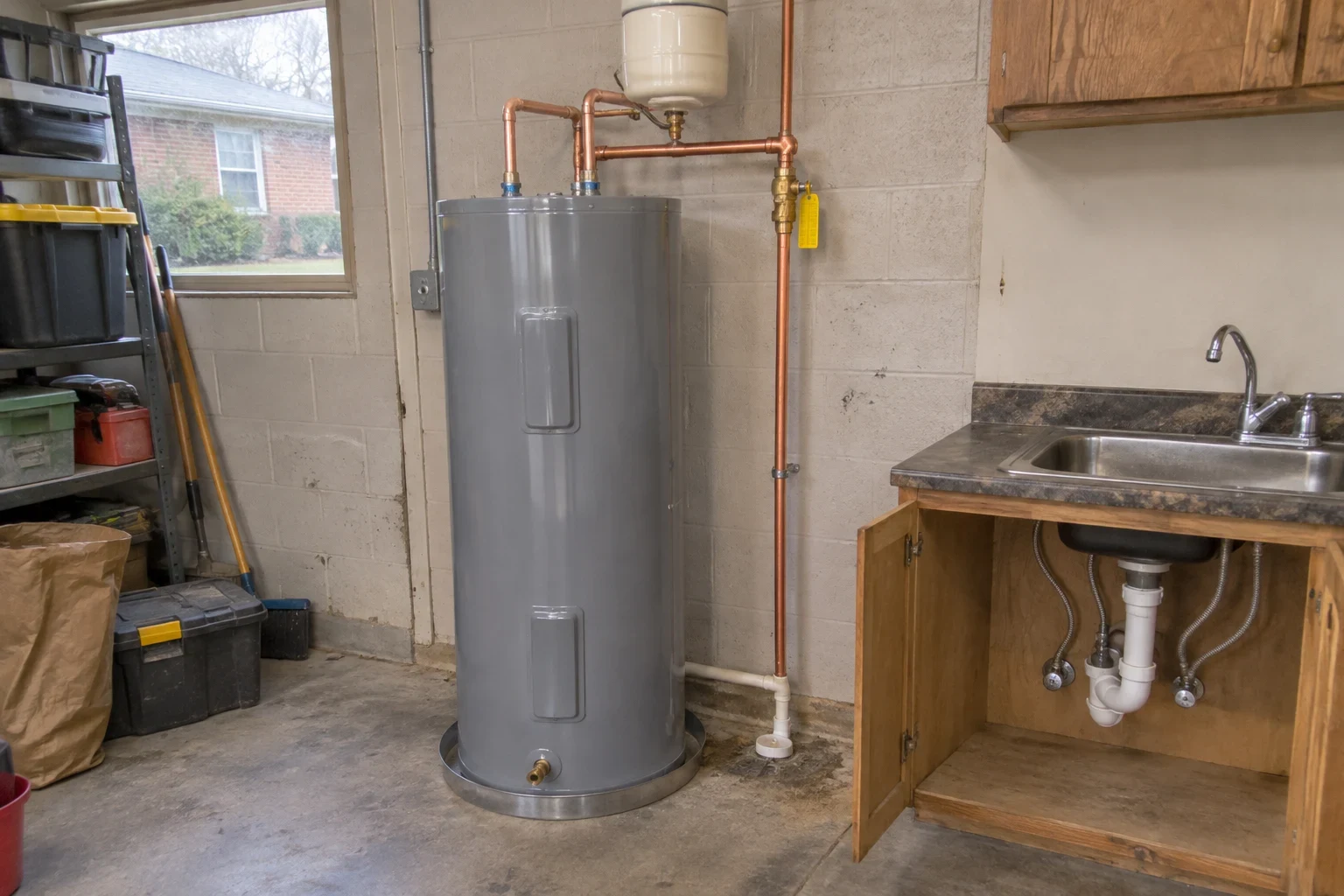
We will check its age and condition, tell you how much life is likely left and explain what upkeep or replacement makes sense. If it fails overnight, our 24/7 emergency plumbing service can help.