ServicesTankless Water Heaters
Tankless Water Heater Installation in Christiana
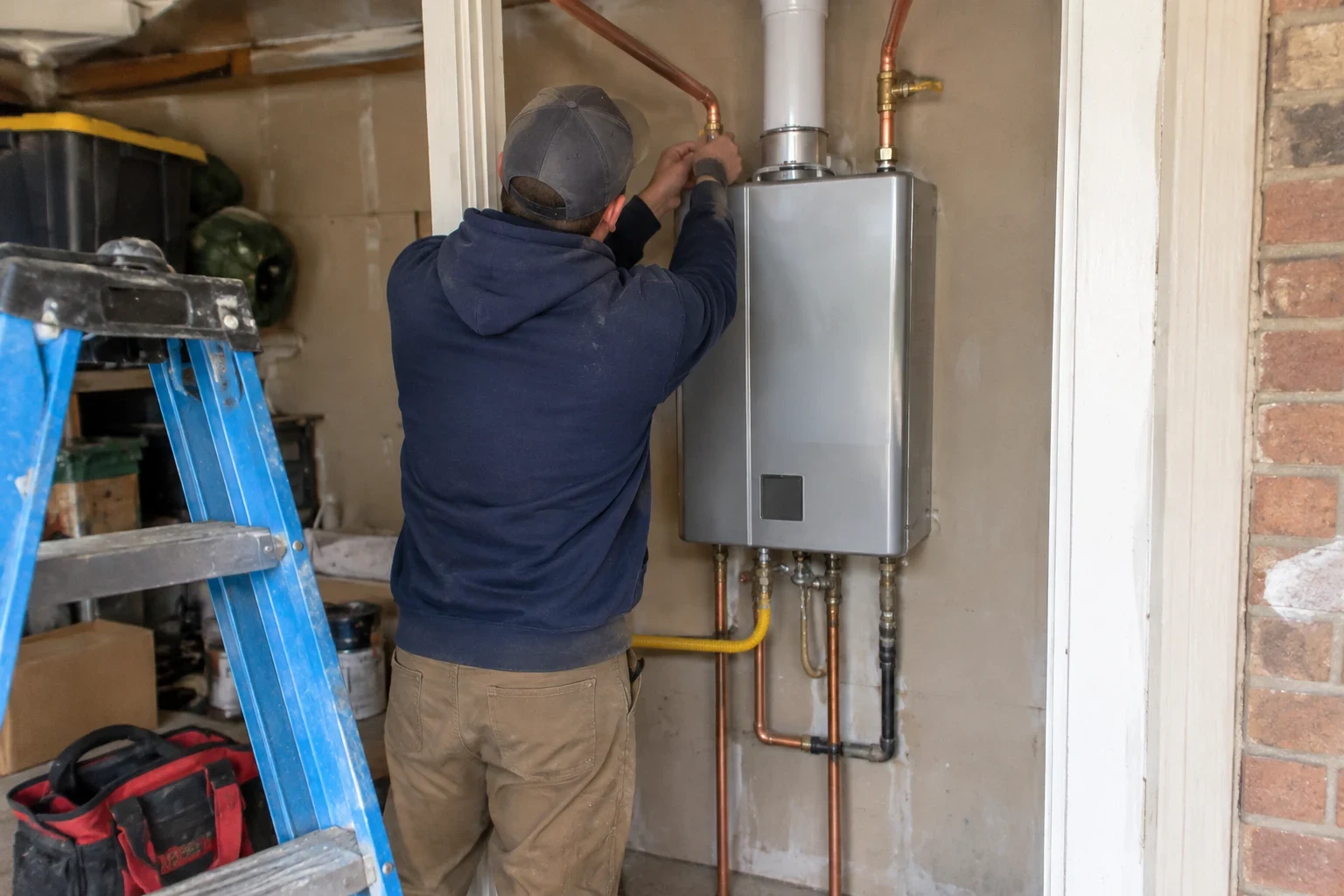
A tankless water heater can give your home steady hot water for many years, if it is sized correctly and set up to be maintained. We handle the gas or electric hookup, venting, valves and startup, then show you how to keep it running well.
Is a Tankless Unit the Right Fit for Your Home
With a tankless water heater, water is warmed on demand as it passes through the unit. Nothing sits in a tank being kept hot all day and night, so the heater takes up less room and wastes less energy while the house is quiet. Kept in good shape, one often lasts several years longer than a standard tank.
The tradeoff is sizing. A tankless heater has to match the way your family really uses water, and the hardest test is a cold winter morning with two showers going while the dishwasher fills. We size the unit for that moment, not for an ordinary afternoon.
We also plan for the care it will need down the road. Water around Middle Tennessee tends to carry minerals, and scale buildup is the main thing that cuts a tankless heater's life short. Every install we do includes service valves, so a flush is a short, routine task rather than a big job.
What Your Installation Includes
Sizing based on your fixtures
We count your showers, tubs and appliances and ask how your family uses hot water. From there we recommend a flow rate and a unit, and we explain why.
Gas line or electrical check
Gas tankless units often need a larger supply line than an old tank used. Electric models draw a lot of power, and if your panel needs work we will tell you plainly that an electrician is required before we install.
Proper venting
Gas units need venting rated for that specific heater. We route it to the outside to the manufacturer's clearances so exhaust leaves your home the way it should.
Isolation valves for flushing
We install service valves on the hot and cold lines. They let you or us flush mineral scale out of the heat exchanger without cutting into pipe.
Removal of the old heater
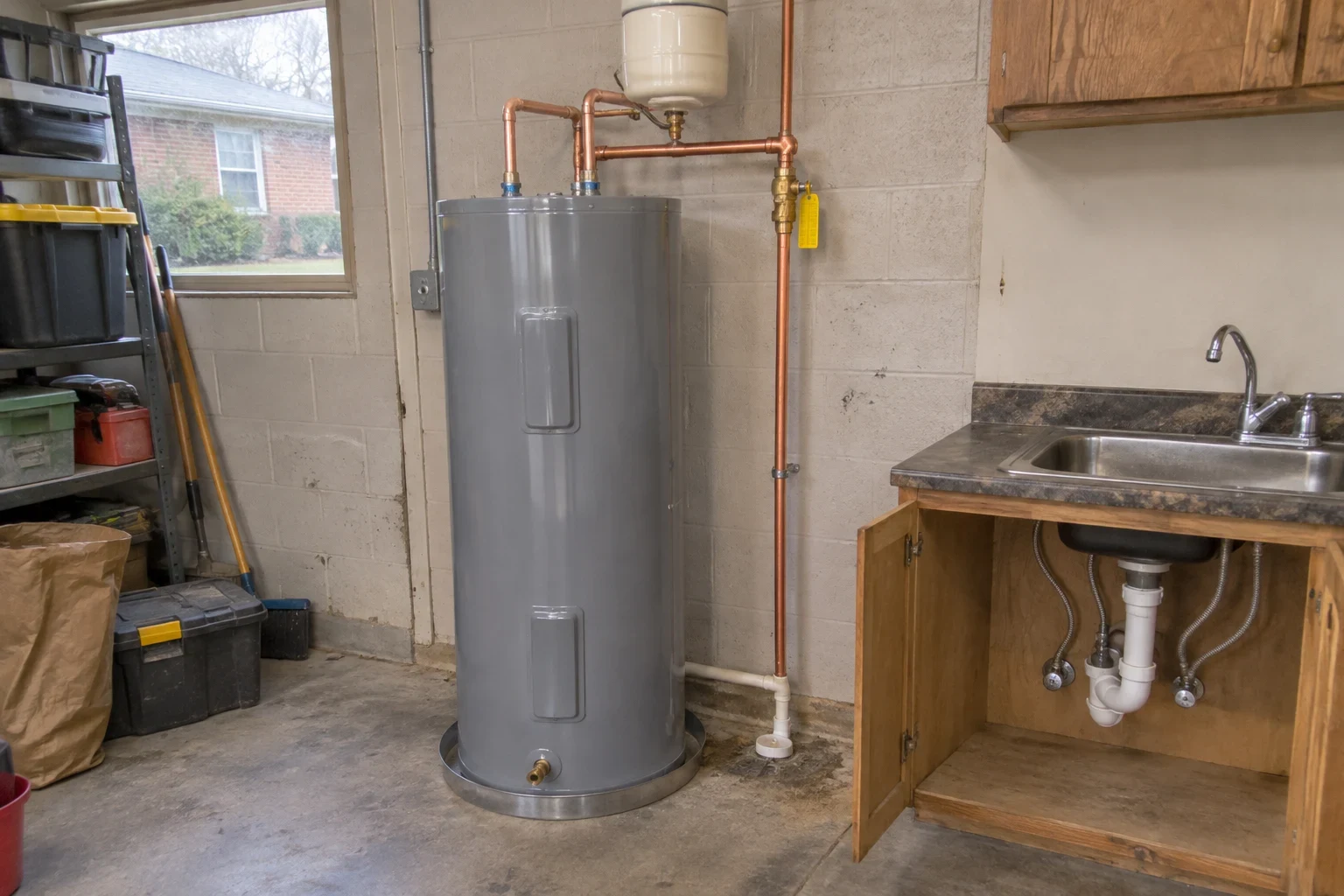
We drain and disconnect your old tank, haul it out and clean up the area where the new unit hangs on the wall.
Startup and a walkthrough
We fire the unit, check temperature and flow at several taps, and show you the controls, the error codes worth knowing and how the flushing valves work.
Signs It May Be Time to Go Tankless
Your tank is getting older
Many tank heaters start to wear out somewhere past the ten-year mark. Planning a switch before the old one fails lets you choose the right unit on your schedule.
Hot water runs out too soon
If the last person in the shower always gets lukewarm water, a properly sized tankless unit can keep up with back-to-back use.
Rust-colored water or rumbling noises
Discolored hot water or popping sounds from the tank often mean corrosion or heavy sediment inside. Both point to a tank near the end of its life.
You need the floor space back
A tankless heater mounts on a wall, which frees up a closet, garage corner or utility room for other uses.
You are remodeling or adding a bathroom
More fixtures can push an older tank past what it can supply. A remodel is often the easiest time to change your water heating setup.
How Installation Day Goes
- 1
Free estimate and site look
We visit, look at your current heater, gas or electric service and where venting can go, then give you a written estimate with each part of the job listed.
- 2
Prep and protection
On install day we cover floors along our path, shut off water and fuel to the old heater, and drain it.
- 3
Mounting and connections
We hang the new unit, run water, gas or power and venting, and add the service valves and a pressure relief valve.
- 4
Testing and cleanup
We check every joint, run hot water at multiple fixtures, adjust the temperature setting, then haul away the old tank and leave the space clean. Most swaps are done in a day.
What Affects the Price
Every home starts from a different setup, so we put a price on your job only after we have seen it in person. Your written estimate breaks out the unit, the labor and any changes to the gas line, power or venting on separate lines, so you know where each part of the cost comes from before work begins. If spreading out the cost would help, ask us about financing options. We take cash as well as all major credit cards.
- Unit size and fuel type
- A unit with a higher flow rate costs more, and gas and electric models sit at different price points. We suggest the size your home actually needs, not the largest model on the shelf.
- Gas line or power upgrades
- An old tank often ran fine on a gas line that is too small for a tankless unit, so that line may need to be upsized. Electric models can require panel work, which an electrician handles.
- Venting route
- Venting straight out through a nearby exterior wall is a simpler job than a long run with several bends or a route up through the roof.
- Location changes
- Mounting the new heater close to where the old tank stood keeps piping short. Relocating it means more pipe and more hours.
- Permits
- Gas and water heater work usually calls for a permit and an inspection. That cost shows up as its own line on your estimate.
Common Questions About Going Tankless
Something not covered here? (615) 805-6484
What kind of lifespan can I expect from a tankless unit?
With regular care, many units run for around twenty years, which is longer than most tank heaters. Mineral scale inside the heat exchanger is what wears them down fastest. Keeping up with flushing is the simplest way to stretch that lifespan.
How often does it need to be flushed?
Once a year is a sensible place to start for most homes around here. If your water is on the hard side, you may want to flush more often. The service valves we put in make it a quick job, and we are happy to handle it for you.
Will a tankless heater keep up with my whole family?
Yes, as long as it is sized for your busiest moments. We look at how many fixtures run at once and how cold your incoming water gets in winter. That way the unit has room to spare on a hectic morning.
Should I pick gas or electric?
When your home already has natural gas or propane, a gas unit tends to handle heavy demand better. Electric units are easier to vent but need plenty of electrical capacity. We go over the tradeoffs of each with you during the estimate.
What happens if my water heater quits before you can install the new one?
Pick up the phone and let us know. We offer 24/7 emergency plumbing service, so you have help right away while we plan the replacement.
Ready for Hot Water That Keeps Up
Give us a ring and let us know what heater you have now and when your family uses the most hot water. We will stop by, check your setup and lay out a clear plan for a tankless unit that suits your home.